Social media for those who aren't online.

A printed magazine made for one reader. Every month it gathers what family and friends have been up to — the photos, the news, the small moments — and fills the rest with what that reader actually follows. It arrives in the mail. It sits on the table. Anyone walking past can pick it up.

How it works →

How it works

Their people send. We assemble. It arrives.

Once a month we collect from everyone who'd have posted it anyway: the kids, the grandkids, the sister in Minneapolis, the friend from the old neighborhood, the man they still golf with on Thursdays. We write it up, lay it out, print it, and mail it. No app to learn on either end.

01

Family and friends send.

A photo, a text, a voice memo, a forwarded email. Whatever they already do, to whoever already asks.

No forms for Grandma.
02

We make the issue.

Twenty pages. Their people, their interests, their hometown, in their voice.

Written for one reader.
03

It lands in the mailbox.

Printed and posted every month. Refrigerator-magnet compatible.

No password. No battery.
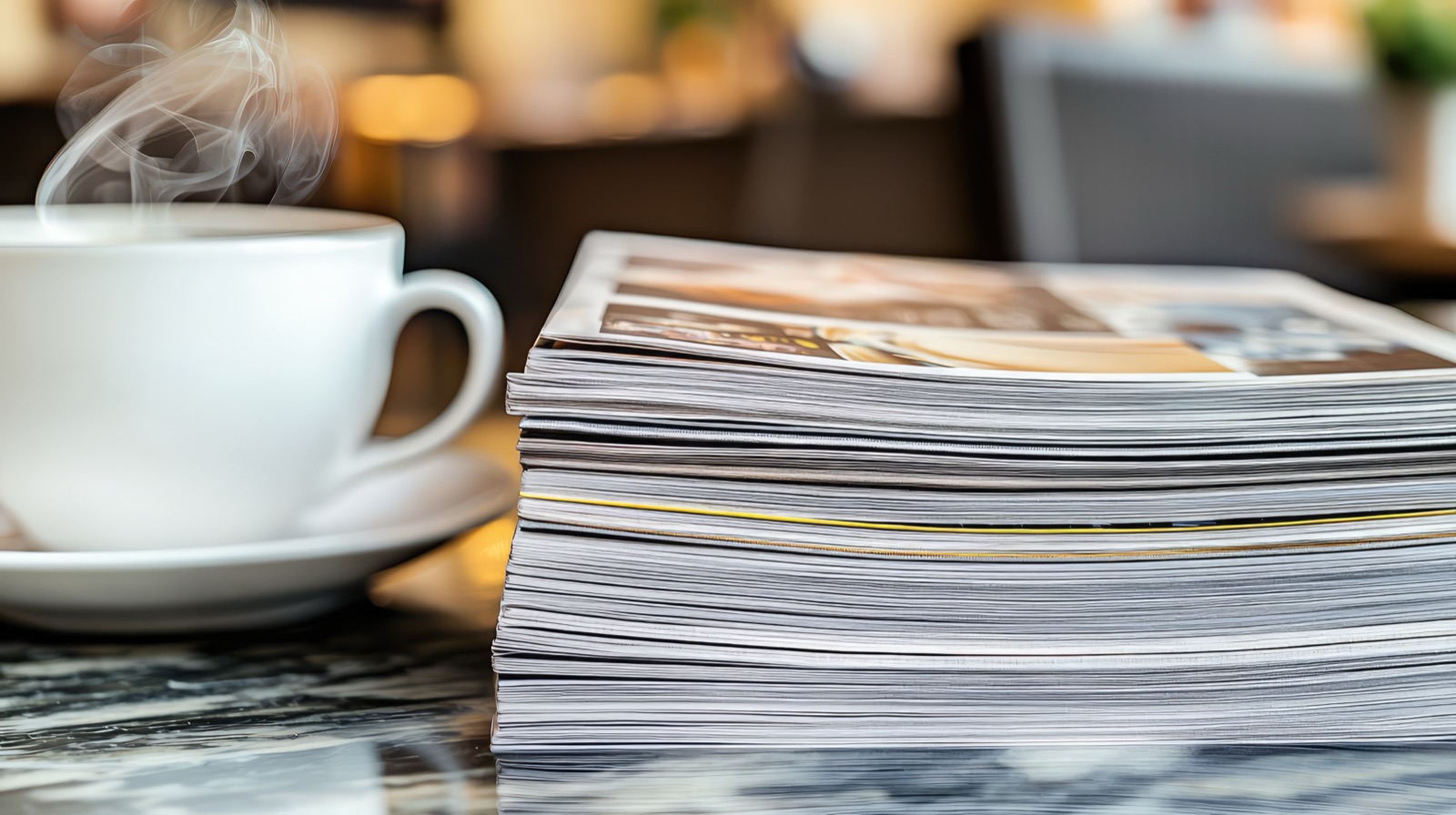
A stack of printed magazines on a table beside a cup of coffee

The object

Something to pick up, not something to open.

Twenty pages on matte paper, large type throughout, with a name on the cover. It stays on the table. It gets read twice, then handed to somebody else in the room. No notification ever told anyone to look at it.

Thumbed, not scrolled.

A real issue

Issue No. 1, September 2026. Made for Norman.

Most of an issue is other people's news — what everyone has actually been doing, which is the part a feed would carry if the reader were on one. So each ask goes to one person, about one specific thing, and can be answered standing in a parking lot. Some are about their own month. Some draw on history they share with the reader, because a good issue has both.

These are real asks and real answers from one family's issue — the magazine we built for my father. Yours will read nothing like it: the questions are written from the lives you describe to us, and the rest of the issue is filled with what your reader follows anyway.

The

Paper
Route

No. 1September 2026
A family laughing together around a waterside restaurant counter at sunset, watching the chef work

Seven at Ray's Boathouse

For NormanCirculation: one

Twenty pages. Circulation: one.

Inside this issue

  • Lynn and Ronnie's Week in Seattle04
  • Elliott's Summer of Baseball07
  • Rebuilding the Brighton Beach Boardwalk12
  • The Giants Open the Harbaugh Era10
  • A Call from the Olive Garden in Rockaway16
  • The September Calendar19
To his daughter-in-law

"Send one photo from this month. A game, a dinner, a driveway, anything."

"We took Dad out on the Argosy cruise with Lynn. He ordered a Coke on the top deck and let me photograph him holding it up."

To his son

"Anything happen this month he'd want to hear about first?"

"Elliott's travel team won the whole tournament up in Everett. There are rings. He was standing right there in a Magnolia cap."

To his other son

"Send one photo of something you built or fixed. We'll ask about it next month."

"Rebuilt the basement staircase and redid the kitchen island. Nobody taught me any of it, I just worked it out."

To his sister

"What's something he did that drove you crazy at the time and is funny now?"

"He'd order a Coke anywhere, at any hour, without once looking at the menu. Still does."

To an old colleague

"What was he like to work alongside? Thirty seconds of voice note is perfect."

"Every man at this lunch table audited with him at the GAO. We called him partway through and passed the phone around."

To a cousin who stayed east

"What's the one place from back home he'd want news of?"

"The boardwalk, without a doubt. He walked Brighton Beach as a boy and he still asks about it."

The standing sections

Their month, their people, their interests.

The month in photos.

What family and friends sent, printed large, with names under every face.

Back home.

One item every issue from the place they came from. The boardwalk, the lift bridge, the church rummage sale.

Whatever they follow.

A team and the standings, the fishing report, the garden in October, the auction results. Whatever they'd have checked anyway, checked for them.

The month ahead.

Birthdays, holidays, and the games worth circling. Big type.

Beta pricing

One price, twelve issues, held for as long as you stay.

Save $33

Annual

$315 / year

$26.25 a month, billed once. Save $33 against paying monthly.

  • Twelve 20-page issues a year
  • Their interests, their hometown and the month's news, every issue
  • One printed copy, mailed anywhere in the US
  • As many contributors as you want, family or friends
  • Every issue kept online for the family
Start annual

Monthly

$29 / month

Cancel any time, including mid-issue.

  • Twelve 20-page issues a year
  • Their interests, their hometown and the month's news, every issue
  • One printed copy, mailed anywhere in the US
  • As many contributors as you want, family or friends
  • Every issue kept online for the family
Start monthly

You'll pay first, then tell us who it's for — who they are, what they follow, and the five people we should ask each month. Setup takes ten minutes and happens once. Subscribe and finish setup by the 15th and the first issue arrives in the first week of the following month — after the 15th it's the month after that, because there isn't time to ask your family and get the answers back before the current issue goes to print.

Payment is handled by Stripe; we never see your card number. Beta is capped at 50 families so we can call every one of you. US mailing addresses only for now. If an issue arrives damaged or wrong, we reprint it and you don't pay for it.

Assisted living in Washington runs $7,000 to $9,000 a month. This is $29.

Before you ask

The questions we get.

Do they need a phone, a tablet, or a login?

No. Nothing about this touches them digitally. They get an object in the mail with their name on it. The only people using their phones are the ones sending stories in, and they're just replying to a text.

When does the first issue actually arrive?

Subscribe and finish setup by the 15th of a month, and the first issue lands in the first week of the month after. Do both on the 12th of September and it arrives in early October; leave setup until the 20th and it's the first week of November instead. The gap isn't padding — questions go out to your family at the start of the month, the answers come back through it, and the issue is printed and posted on the 27th. Miss that and there's nothing to print. Every issue after the first one arrives in the first week of its month, with nothing for you to do.

Is this only for older parents?

No. It works for anyone who'd rather have a printed record of their life than a feed of it — someone living far from the people they love, a person recovering from something long, a family that wants a proper account of a year instead of nine thousand photos nobody opens. We're starting with families looking after a parent because that's where the need is sharpest and the alternative is worst: the person who most wants the news is the one least able to reach it. Everything here works the same whoever it's addressed to.

Who writes it?

We do, from what family and friends send. Someone in the family proofs every issue for names and faces before it prints.

Will my family actually reply?

That's the whole thing we built. One question, to one person, about one specific thing, answerable in thirty seconds without opening an app. If someone goes quiet two months running we stop asking them and ask you for another name instead.

Does the AI make things up?

It doesn't invent facts and it never guesses who's in a photograph. It takes what people actually send and sets it in the house voice. Names, dates and relationships come from you and from the person who sent the photo. You can read any issue before it prints.

Where do the sports and news pages come from?

We write them. Results and standings are facts, so we pull those from a sports data feed and put them in a box that can be read at a glance. The news pages and the hometown page get written in plain sentences from what actually happened that month. We don't reprint articles and we don't run photographs we don't have the right to run.

The person I'd send it to has dementia. Is this a good idea?

That's who we built it for. Captions are written as statements, never as quizzes, so there's nothing in the issue anyone can fail. Everyone is named every time with their relationship attached. Page 19 is written for whoever is sitting with them rather than for the reader, and it's the page care staff use most.

What if it's a thin month and nobody sends much?

The issue still ships at twenty pages. Roughly half of it doesn't depend on anybody replying: whatever they follow, the news pages, the hometown page, the era feature and the recurring pages all get built from the dossier you gave us at setup. Family photos are the part we have to ask for, and a thin month there just means the other pages run longer.

Can more than one of us pay for it?

Not yet, but it's the request we get most. For now one person subscribes and everyone else contributes for free. Split it however you like on your end.

Can I cancel?

Yes, any time. Email hello@paper-route.com and we'll cancel it — no questions asked, and on an annual plan we refund the unused whole months.

What happens to the issues afterward?

Every issue stays in your family archive online, and at the end of the year you can order all twelve bound into one volume. Families tend to want that copy more than they expect to.

Why paper

Because connection shouldn't require Wi-Fi.

A photograph you have to unlock a phone to find is a photograph nobody looks at twice. The people most worth keeping up with are often the least likely to be scrolling. So this comes on paper.

Get started →